Industry · CNC & Precision

Cooling for CNC & precision machining floors.

On a precision floor, heat isn't just discomfort — it's drift. Spindle heat and a rising ambient walk your tolerances out, and scrap follows. We hold the floor steady, copper-free, on about half the horsepower of conventional AC.

The problem

Why a hot CNC floor costs you parts.

Precision machining and heat don't mix — and a factory floor makes its own heat all day long.

Thermal drift moves your tolerances

Metal grows as it warms. A floor that climbs 5–6°C over a shift walks your dimensions out — the first-off passes, the mid-afternoon parts don't.

The machines heat the hall

Spindles, servos and hydraulics dump heat continuously. Without cooling, the hall only gets hotter as production ramps — exactly when you need it stable.

Humidity & operator fatigue

Sweat on the operators, condensation on cold stock, rust on ways and finished parts. A hot, damp floor slows people down and marks your work.

Why copper-free fits

Hold the whole floor steady — without the HP or the bill.

Holds a temperature — not just a cool one

Precision needs steadiness. We hold the ambient even across the whole hall, so the number your machines see doesn't drift over a shift.

Even coverage, corner to corner

Long-throw jets reach the far machines, so there are no warm pockets — the whole floor sits at one temperature.

About half the horsepower

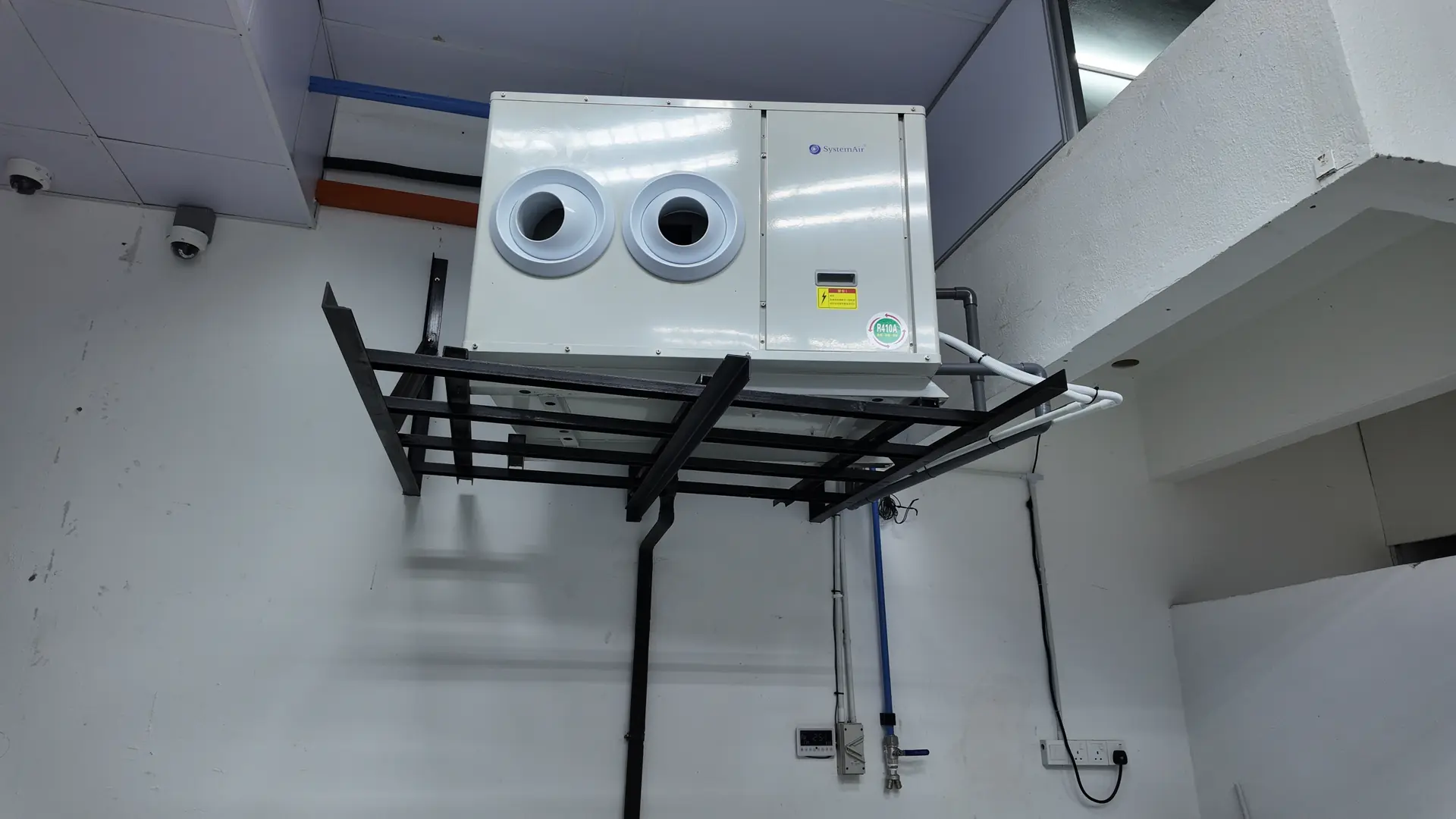
Copper-free needs roughly half the HP of conventional AC and no copper piping — a running cost you can keep paying, shift after shift.

One team keeps it held

We design, install and service it ourselves. If the floor drifts, there's one number to call — not a chain of contractors.

Proof on the floor

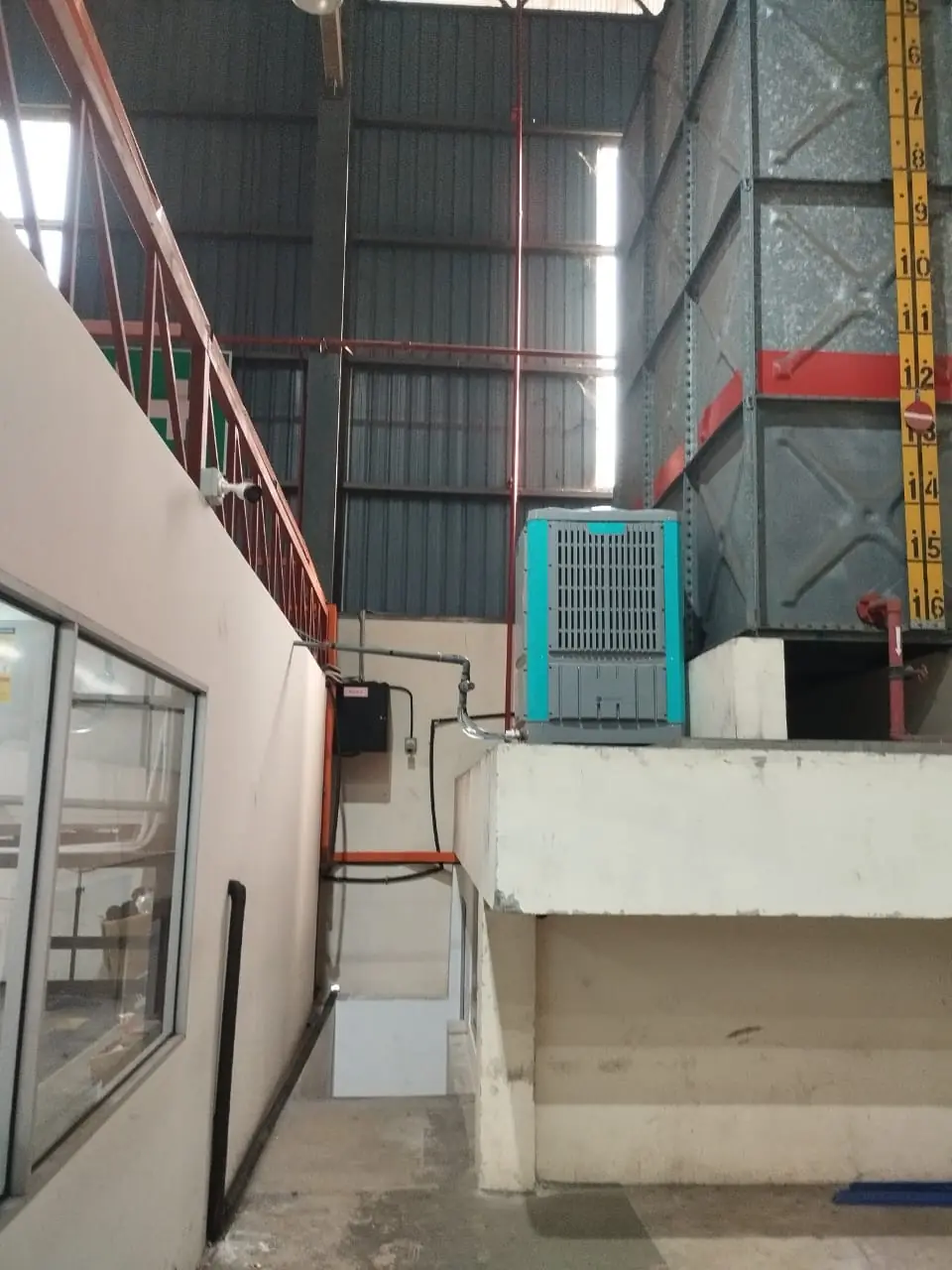
Floors we've already cooled.

Real Malaysian installs — clients kept anonymous, the results are real.

Common questions

CNC & Precision cooling, answered.

What temperature should a CNC machining floor be held at?
Most precision shops aim to hold a stable ambient around 24–25°C — the exact target matters less than keeping it steady, because it's the swing over a shift that moves tolerances. We confirm the right setpoint for your parts and machines on a site assessment.
Does ambient temperature really affect machining tolerance?
Yes. Metal expands as it warms — a few degrees of drift across a shift is enough to walk tight dimensions out of spec, so parts that passed first-off start failing later in the day. A stable floor keeps the machine, the stock and the finished part at one temperature.
How many units does a CNC factory need?
Fewer than you'd expect. Copper-free needs about half the horsepower of conventional AC, so a floor that might take 9 conventional units is often cooled by 6 — we've done a 17,000 sq ft precision floor on six units. The calculator gives a rough figure; the site assessment confirms it.

← Part of our copper-free Industrial Air Conditioning

Tell us your floor. We\'ll hold it steady.

Book a free site assessment — we measure your space, heat load, temperature and humidity, and size the exact system you need.

Got a cooling problem no one has solved? Tell us — the rest is our problem.
WhatsApp Us