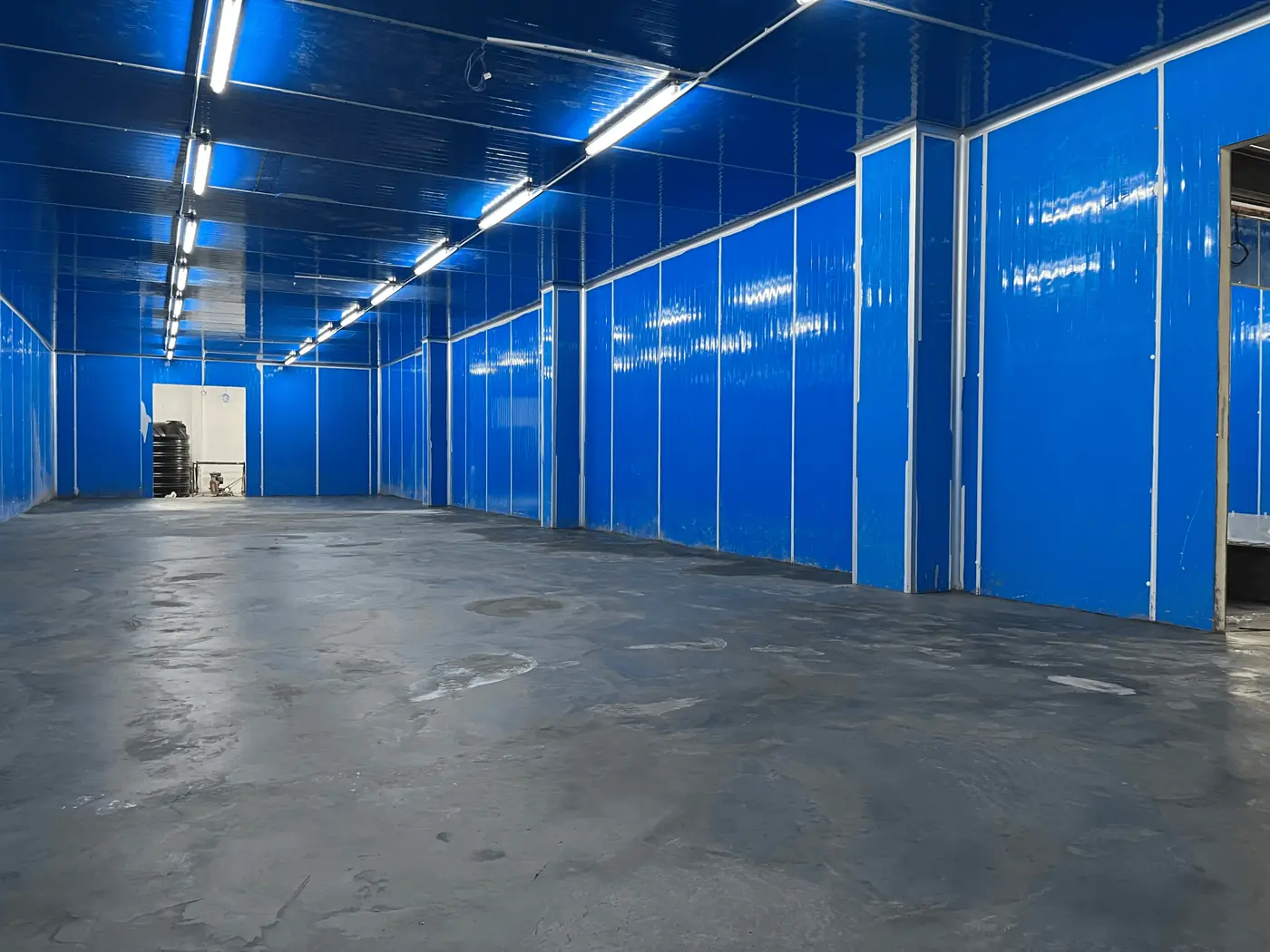
A cold room runs 24/7, so its power bill never stops. The gap between an efficient, monitored cold room and a conventional one adds up fast — and monitoring does something a cheaper room can't: it protects the stock inside.

Enviro Air Cooler (M) Sdn Bhd · Cooling Malaysian factories since 1990 · Updated July 2026
An IoT-monitored cold room typically uses around 40% less electricity than conventional refrigeration for the same duty. The saving comes from efficient refrigeration plant, tighter temperature control (the system holds the set-point instead of over-cooling), and well-insulated panels that keep heat out — while continuous monitoring and alerts protect your stock if anything drifts.
Where the ~40% saving comes from
It isn't one trick — it's three things working together:
- Efficient refrigeration plant. Right-sized, modern equipment does the same cooling for less power than older or oversized systems.
- Tighter temperature control. A well-controlled room holds its set-point instead of swinging cold and over-cooling. Every unnecessary degree of cooling is wasted electricity.
- Better insulation and sealing. Quality panels and door seals keep heat out, so the plant runs less often to hold temperature.
Add IoT monitoring on top and you can actually see how the room performs — and catch a door left open or a seal failing before it turns into a power spike or a stock loss.
Conventional vs IoT cold room
| For the same cold storage | Conventional refrigeration | Enviro IoT cold room |
|---|---|---|
| Electricity use | Baseline | ~40% less |
| Temperature control | Can swing / over-cool | Holds set-point |
| Monitoring | Manual checks | 24/7 remote, with alerts |
| Stock protection | You find out when it's warm | Alerted before stock is at risk |
Freezer vs chiller — what temperature do you need?
The right temperature depends on what you store:
- Chiller rooms (roughly 2–8°C) for fresh produce, dairy, and short-term food storage.
- Freezer rooms (around −18°C and below) for frozen meat, seafood and ice cream.
Colder rooms work harder, so efficient plant and good insulation matter even more at freezer temperatures — it's where the electricity difference is largest.
Monitoring that protects your stock
The electricity saving is the headline, but for most operators the bigger risk is losing a room full of stock. IoT monitoring tracks the temperature continuously and alerts you the moment it drifts — a failing compressor, a door left open, a power event — so you can act before the stock is gone. For facilities that can't afford to lose product, that's the feature that pays for itself in a single incident.
We design, build and monitor cold rooms end to end. See our Cold Room Systems page, or tell us your room size and target temperature and we'll size it for you.
Frequently asked questions
How much electricity can an IoT cold room save?
What temperature should a cold room be?
What does IoT monitoring do for a cold room?
Enviro Engineering Team
Enviro Air Cooler (M) Sdn Bhd has designed, installed and serviced industrial cooling for Malaysian factories since 1990 — from evaporative coolers to copper-free industrial air conditioning and IoT cold rooms. Every figure here comes from systems we've actually installed.
Planning a cold room?
Tell us your room size, target temperature and stored goods, and we will size an efficient, monitored cold room for you.
