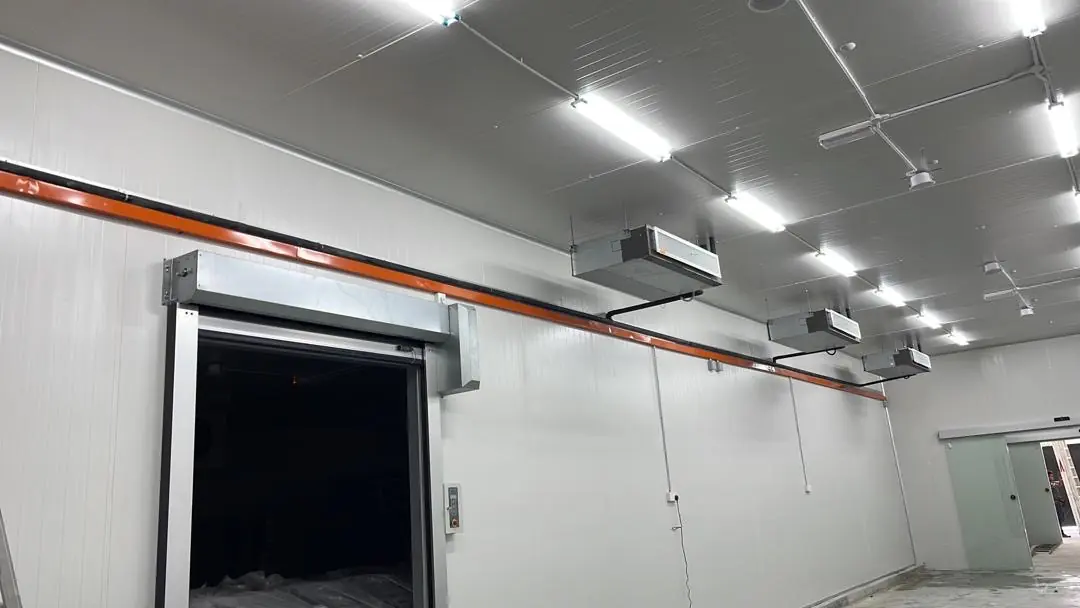
Most factory air conditioning still runs on copper piping. Copper-free does the same job on about half the horsepower — which changes both what you pay to install it and what you pay every month to run it.

Enviro Air Cooler (M) Sdn Bhd · Cooling Malaysian factories since 1990 · Updated July 2026
A conventional system links its indoor and outdoor units with copper piping and sizes up the horsepower to cover its losses. A copper-free system connects them through a water / PVC line instead and cools the same floor on about half the HP — e.g. 7 HP (~6.85 kW) where copper would need 15 HP (~12.4 kW). That means roughly 50% lower install cost, about half the electricity, and no theft-prone copper or leak-prone joints.
What is actually different
The cooling job is the same — bring a factory floor down to temperature and hold it. The difference is how the indoor and outdoor units are connected and how much horsepower it takes.
- Conventional: copper refrigerant piping between units, sized to a higher HP to compensate for the system's losses.
- Copper-free: a water / PVC line between units, cooling the same floor on far less horsepower.
Side by side, for the same floor
| For the same factory floor | Conventional copper AC | SystemAir copper-free |
|---|---|---|
| Horsepower needed | 15 HP | 7 HP |
| Electricity draw | ~12.4 kW | ~6.85 kW |
| Connection between units | Copper piping | Water / PVC line |
| Theft & leak risk | Copper is a theft target; joints can leak | No copper; near-zero leak risk |
| Typical install cost | Baseline | ~50% lower |
Why it costs less — up front and every month
Two effects stack up. First, lower horsepower means a cheaper install — you're not paying for and powering a 15 HP machine to do a 7 HP job. Second, because the unit draws about half the electricity, the saving keeps landing on every TNB bill.
Running 12 hours a day, 26 days a month, a 7 HP copper-free unit versus the 15 HP conventional system it replaces saves roughly RM 800–900 a month — about RM 10,000 a year on electricity alone. Over the life of the system, that difference typically covers the cost of the equipment. See the full breakdown in our cost guide.
On a 2,000 sq ft precision-machining floor, one 7 HP copper-free unit replaced what a conventional design would have sized at 15 HP — cutting the connected load from ~12.4 kW to ~6.85 kW and saving the customer around RM 850 a month on electricity.
Reliability and the copper-theft problem
Copper piping is valuable, which makes outdoor runs a target for theft — a real and recurring headache on Malaysian sites. Removing the copper removes that target. It also removes a common failure point: copper joints can develop refrigerant leaks over time, while a water / PVC line has near-zero leak risk. And whatever you install, when something needs attention it's our own technician on your floor, not an overseas call centre.
Is copper ever the right call? For some specialised applications, yes — which is exactly what a site assessment is for. For the large open factory floors most of our customers run, copper-free wins on cost, power and reliability.
Frequently asked questions
Is copper-free air conditioning cheaper than copper?
Why does copper-free use less horsepower?
Is copper-free air conditioning reliable?
Enviro Engineering Team
Enviro Air Cooler (M) Sdn Bhd has designed, installed and serviced industrial cooling for Malaysian factories since 1990 — from evaporative coolers to copper-free industrial air conditioning and IoT cold rooms. Every figure here comes from systems we've actually installed.
See the copper-free numbers for your floor
The calculator shows your HP and the electricity you would save against conventional AC. We confirm it on a free site assessment.
